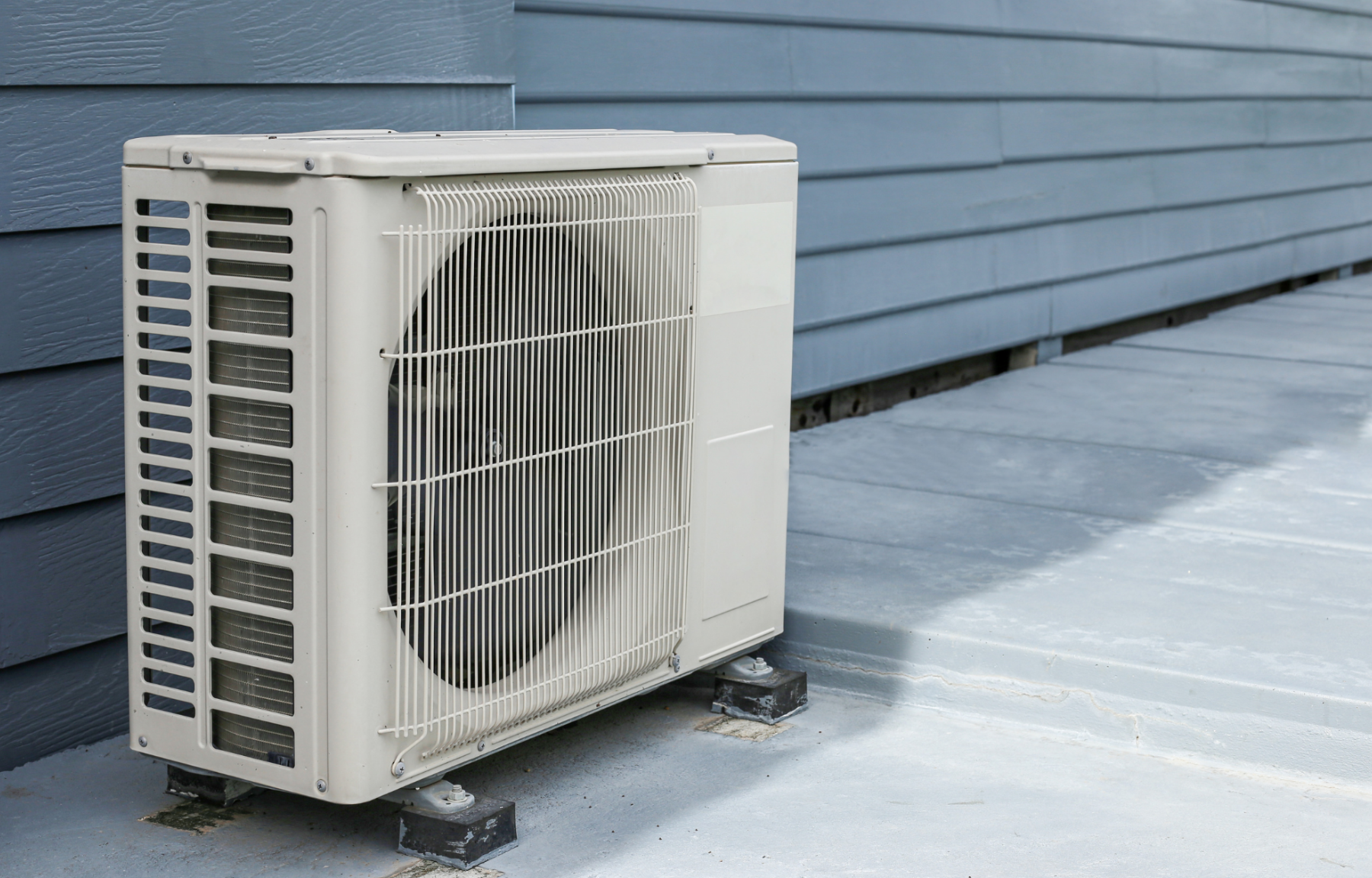
Air source heat pumps (ASHPs) have had mixed reviews over the past few years and for good reason.
Some homeowners report lower bills, stable temperatures and a more comfortable home overall. Others say their costs have gone up, their homes feel colder and the system just doesn't perform.
So, what's actually going on?
Here's the honest answer from a seasoned Retrofit Consultant; It's not the heat pump, it's the house it's installed in.
Because heat pumps don't generate heat in the same way traditional systems do, they rely heavily on the building's ability to retain warmth. If the property isn't prepared for low-temperature heating, performance will always fall short, regardless of how good the system itself is.
How Air Source Heat Pumps Actually Work
An air source heat pump doesn't work like a gas boiler.
A gas boiler delivers short bursts of high heat. You turn it up, it fires hard and your radiators get hot quickly.
A heat pump actually does the opposite.
It runs continuously at a lower temperature, maintaining a steady background warmth rather than reacting to spikes in demand.
I tend to think of it like this:
- Gas boiler = sprint
- Heat pump = marathon
Because of this, heat pumps rely heavily on your home's ability to retain heat, not just generate it.
So, Why Do Some Homes Perform Brilliantly (and Others Don’t)
If your home is well insulated, a heat pump can work extremely well.
We're talking:
- Loft insulation (ideally 300mm)
- Cavity wall insulation (or equivalent upgrades)
- Insulated floors
- Good quality double or triple glazing
- Minimal draughts
In these conditions, the heat pump can maintain a consistent temperature without working too hard. Which is where the efficiency and savings come from.
But here's where it goes wrong.
If you install a heat pump into:
- A pre-1930s solid wall property
- A house with suspended timber floors and no insulation
- Poor glazing or high air leakage
Then the heat you generate escapes just as quickly as you produce it.
And because heat pumps run at lower temperatures, they can't compensate for that heat loss in the same way a gas boiler can.
Radiators, Cylinders and System Changes
Another common misconception is that you can simply remove your gas boiler and swap in a heat pump like-for-like.
In reality, it's rarely that straightforward. A heat pump is part of a low-temperature heating system, which means the entire setup, not just the unit itself needs to be designed differently. If you skip this step, performance will suffer.
Radiators
Because heat pumps run at lower flow temperatures (typically around 35–55°C compared to 60–75°C for gas boilers), your radiators need to work harder to deliver the same level of heat into the room.
That usually means:
- Small, single-panel radiators won't be sufficient
- You'll often need larger double or triple panel radiators, or higher output models
- In some cases, homeowners opt for underfloor heating, which is better suited to low-temperature systems
If radiators aren't upgraded, rooms may struggle to reach or maintain a comfortable temperature even if the heat pump itself is working correctly.
Hot Water Cylinder
Unlike combi boilers, most air source heat pump systems require a dedicated hot water cylinder.
These are typically:
- Larger than standard cylinders
- Designed to store hot water at lower temperatures
- Paired with immersion heaters or boost functions for peak demand
You'll also need physical space to install it, which can be a challenge in smaller homes or flats.
This is particularly important if you're moving from a combi boiler setup, where hot water is delivered instantly without storage, it's a different way of thinking about how your home runs day-to-day.
System Design Matters
This is where many installations fall short.
A proper heat pump install should include:
- A full heat loss calculation for each room
- Correct radiator sizing based on those calculations
- Consideration of insulation and fabric upgrades
- A system designed to run continuously, not intermittently
Without this, you're effectively asking a low-temperature system to perform like a high-temperature one and it won't.
The Cost Question: Will It Save You Money?
Well, this is where I find expectations often fall apart.
There's a common belief that heat pumps are always cheaper to run. That's not necessarily true.
In fact:
- Electricity is typically more expensive per kWh than gas in the UK
- Heat pumps rely on efficiency (COP coefficient of performance) to offset this
In a well-performing system, a heat pump might achieve a COP of 3–4 (meaning 1 unit of electricity produces 3–4 units of heat).
But if your house is losing heat quickly, that efficiency drops and your running costs can increase.
So yes, you can save money — but only if the system is designed properly and the house is prepared for it.
Are Air Source Heat Pumps Actually Worth It?
By now, you've probably realised this isn't a simple yes or no. Air source heat pumps aren't inherently good or bad, they're context dependent.
In the right property, with the right design, they deliver:
- Stable, even temperatures
- Lower carbon emissions
- Strong long term performance
In the wrong setup, they expose every weakness in the building and that's where most of the bad press comes from.
The Real Issue No One Talks About
Most heat pump failures aren't technology failures.
They're design failures.
Too often, we see:
- Systems installed without proper heat loss calculations
- Radiators left undersized
- Insulation ignored or treated as optional
- Homes expected to perform like new builds when they're anything but
A heat pump doesn't fix a poorly performing house, it reveals it.
If the groundwork isn't done first, the system will always struggle to deliver what's been promised.
Before You Make the Switch
If you're seriously considering a heat pump, take a step back and look at the fundamentals:
- How well does your home retain heat today?
- Where are your biggest areas of heat loss?
- What upgrades would actually move the needle?
- How is your current system being used day-to-day?
These answers matter far more than the specification sheet of any system.
EcoGrade.ai can help give you a good starting place to understand what and where your property needs the most attention.